Internal vs External Piles: Key ...
- Nov 27, 2026

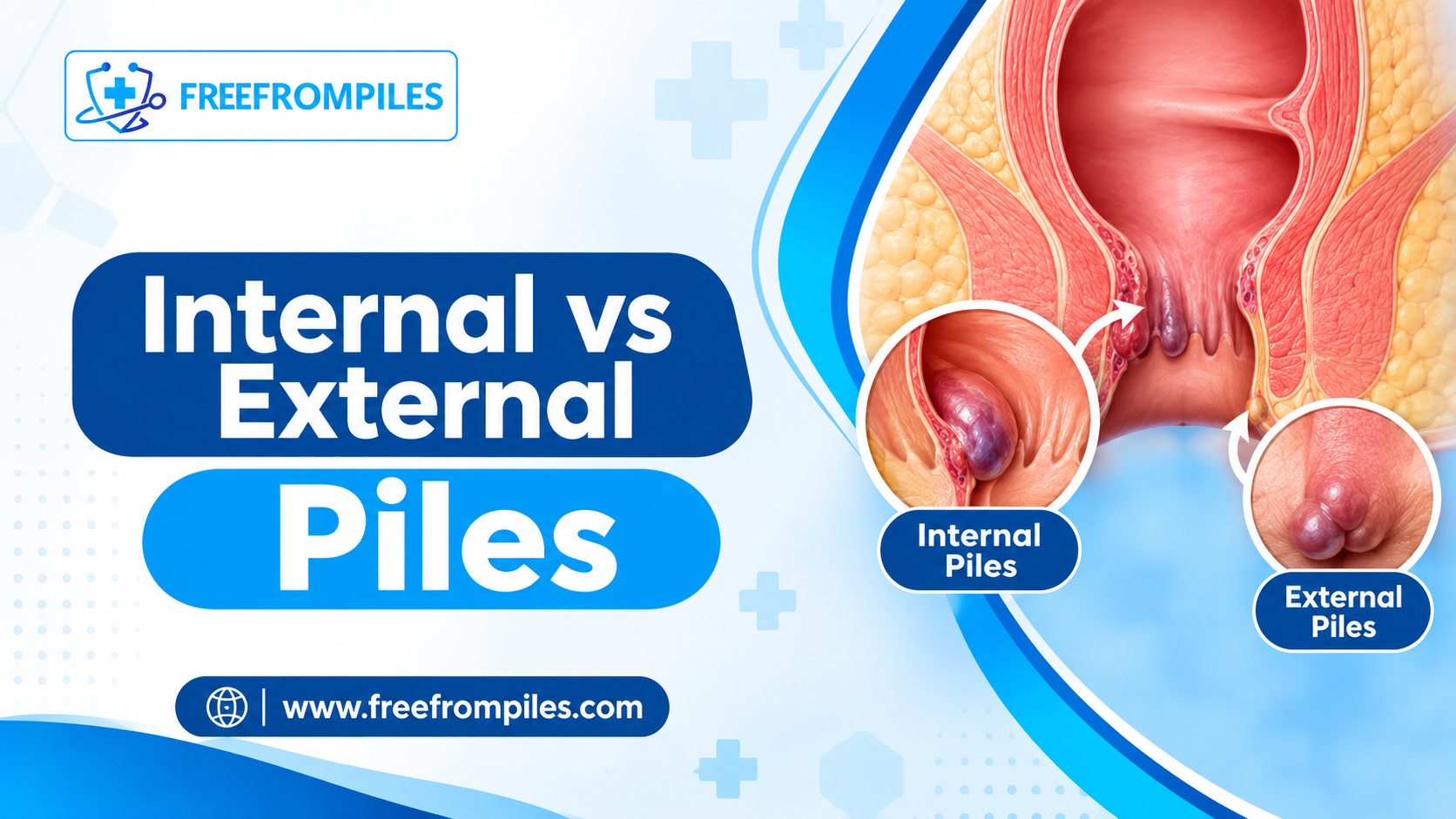
If you have ever felt a strange lump near your anus, noticed a streak of blood on toilet paper, or winced while sitting down, you are not alone. Piles, also called haemorrhoids, affect millions of people, yet most of us stay quiet about them out of embarrassment. That silence often turns a simple problem into a painful one.
The first step towards relief is understanding what you are dealing with. Piles come in two main types, internal and external, and they behave very differently. This guide explains both in plain language, so you know what to look for, when to get help, and what to expect from piles treatment in Bharatpur.
Piles are swollen, inflamed blood vessels in and around the anus and lower rectum. Everyone has soft cushions of tissue here that help control bowel movements. Trouble starts when these cushions get stretched or pressured, usually from straining, and swell up.
Where the swelling happens decides the type. Swelling inside the rectum gives you internal piles. Swelling under the skin around the anus gives you external piles. Some people have both at the same time.
Internal piles develop inside the rectum, higher up than the anal opening. Because that area has very few pain-sensing nerves, they are often painless. Many people only find out they have them when they spot bright red blood after passing stool.
Doctors usually describe internal piles in four grades:
Typical signs include bright red blood on stool or tissue, a feeling of fullness after a bowel movement, mucus discharge, and itching. Pain is uncommon unless the pile prolapses (slips out) and gets squeezed by the anal muscle.
External piles form under the skin around the anus, where nerves are plentiful. That is why they hurt far more than internal ones. You can often feel them as soft, tender lumps near the opening.
Common symptoms include pain or burning while sitting, swelling around the anus, itching and irritation, and sometimes bleeding if the lump is scratched or rubbed. A particular complication is a thrombosed pile, where a blood clot forms inside the swelling. It appears suddenly as a hard, bluish, very painful lump and usually needs medical attention within a few days.
| Feature | Internal Piles | External Piles |
|---|---|---|
| Location | Inside the rectum | Under the skin around the anus |
| Pain | Usually painless | Often painful |
| Bleeding | Common, bright red | Less common |
| Visibility | Not visible unless prolapsed | Visible and can be felt |
| Main concern | Bleeding and prolapse | Pain, swelling, clotting |
| Grading | Graded 1 to 4 | Not graded |
The simple takeaway: Internal piles te
The simple takeaway: Internal piles tend to bleed quietly, while external piles tend to hurt loudly. Either way, the symptoms overlap with other conditions, so a proper examination matters more than guessing.
Both types share the same root cause, which is increased pressure on the veins of the lower rectum. The usual triggers include:
In a city like Bharatpur, where long travel, irregular meals and spicy, low-fibre food are common, these habits quietly add up over the years.
This is important. Rectal bleeding can come from piles, but it can also signal fissures, infections, polyps, or in rare cases, bowel cancer. Self-diagnosis delays the right care. If you notice blood in your stool, a change in bowel habits, unexplained weight loss, or pain that does not settle, get examined rather than relying on home remedies or a neighbour’s advice.
Book an appointment if:
Dr. Madhav Mayank Sharma, a piles doctor in Bharatpur, will examine you, grade the problem, rule out other causes, and suggest a plan that matches your situation rather than pushing surgery by default.
The right approach depends on the type, grade and how much the problem affects your daily life.
Whichever route you take, choose a surgeon who explains every option honestly, discusses recovery time, and gives you a clear follow-up plan.
Prevention is easier than cure, and most of it comes down to daily habits:
Understanding the difference between internal and external piles helps you recognise symptoms early and choose the right care. Internal piles bleed quietly, external piles cause pain and swelling, and both are very treatable when addressed on time. Shame should never be the reason you suffer in silence.
If you are looking for piles treatment in Bharatpur, consider consulting Dr. Madhav Mayank Sharma at Pradeep Hospital. With a patient-first approach, a clear explanation of every option and treatment tailored to your condition, you can take the first step towards comfortable, worry-free living. Book a consultation today and get your answers from an experienced surgeon rather than the internet.
Not exactly. But an internal pile can prolapse and hang outside the anus, where it can feel similar to an external one.
Mild piles often settle with diet and lifestyle changes. Larger or recurring ones usually need medical treatment.
Piles themselves are rarely dangerous, but ignoring them can lead to heavy bleeding, anaemia, clotting or severe pain. Bleeding should always be checked to rule out other conditions.
No. Many people improve with medicines and minor procedures. Surgery is generally reserved for advanced or stubborn cases. If you do need it, look for the Best General Surgeon in Bharatpur you can trust: someone who listens first and recommends only what you truly need.
External piles, because the skin around the anus has many more pain-sensing nerves.


