What Is the Reason for Kidney St...
- Sep 25, 2026

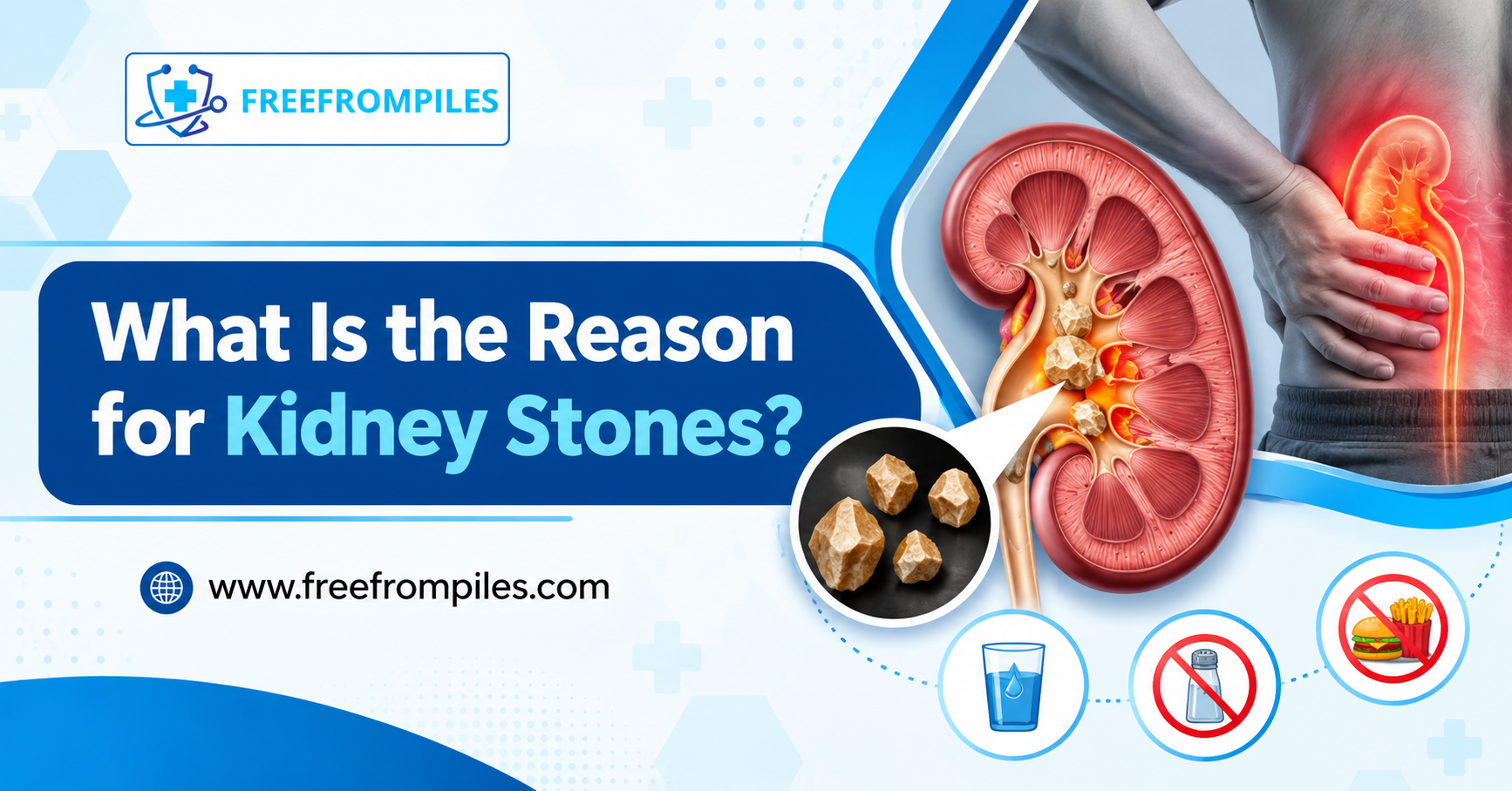
Kidney stones are one of those conditions that seem to strike without warning; one day you’re fine, and the next you’re doubled over with pain that many describe as worse than childbirth. If you’ve ever wondered why kidney stones form in the first place, you’re not alone. This is one of the most searched health questions, and for good reason: nearly 12% of the Indian population will experience a kidney stone at some point in their life.
Let’s break down exactly what causes kidney stones, who’s at risk, and what you can do about it.
A kidney stone is a hard, crystalline mass that forms inside the kidney when certain minerals and salts in urine become concentrated and stick together. These stones can range from as small as a grain of sand to as large as a golf ball, and their size largely determines whether they pass on their own or require medical intervention.
This is, by far, the single biggest cause. When you don’t drink enough fluids, your urine becomes concentrated, allowing minerals like calcium, oxalate, and uric acid to crystallise and stick together instead of flushing out naturally. People living in hot, dry climates or those who sweat heavily without replenishing fluids are especially vulnerable.
A diet loaded with salt increases the amount of calcium your kidneys need to filter, raising the risk of calcium-based stones, the most common type. Processed foods, packaged snacks, and restaurant meals are often the biggest hidden culprits here.
Foods like spinach, beetroot, nuts, chocolate, and tea contain oxalates, which can bind with calcium to form stones. This doesn’t mean you should avoid these nutritious foods entirely, but moderation matters, especially if you’ve had stones before.
Diets high in red meat, poultry, and seafood increase uric acid levels and can lower citrate, a substance that normally helps prevent stone formation. This is a major reason uric acid stones are becoming more common with changing dietary patterns.
Excess body weight alters the way your body processes calcium and other minerals, while a lack of physical activity slows overall metabolic function. Together, these create favourable conditions for stone formation.
If kidney stones run in your family, your own risk increases significantly. Certain inherited metabolic conditions also predispose individuals to recurrent stone formation.
Conditions like hyperparathyroidism, gout, urinary tract infections, and inflammatory bowel disease can all contribute to stone formation by altering urine composition or mineral metabolism.
Calcium supplements, certain diuretics, and some antacids have been linked to increased stone risk when taken without medical supervision.
Kidney stones don’t always cause symptoms, especially when small. But when they do, watch for:
If you experience sudden, severe pain accompanied by fever, this could indicate a complicated stone requiring urgent attention, and you shouldn’t wait it out at home.
Doctors typically rely on a combination of ultrasound, CT scans, and urine tests to confirm the presence, size, and location of a stone. Blood tests also help identify underlying metabolic issues that may be contributing to recurrent stone formation.
Small stones, generally under 4- 5 mm, often pass on their own with increased water intake and pain management. Pain relief, hydration therapy, and medications that help relax the ureter are usually enough to see these smaller stones through.
Larger stones or those causing blockages are a different matter entirely, and this is where things can escalate quickly if left unaddressed. Left untreated, a blocked stone can lead to infection, kidney swelling, and in severe cases, permanent kidney damage. For patients dealing with recurring or sizeable stones, seeking care at a specialised Kidney Stone Hospital in Bharatpur ensures access to advanced diagnostic tools and a full range of treatment options, from medication therapy to minimally invasive procedures, rather than relying on generic pain relief alone.
Interestingly, gut health can play a role in kidney stone formation. Conditions affecting digestion and bowel health, including chronic constipation and inflammatory bowel issues, may alter how the body absorbs oxalate and other minerals. Long-term digestive problems can therefore contribute to changes that increase the risk of certain types of kidney stones.
If you’re experiencing persistent digestive discomfort along with symptoms such as severe side pain, painful urination, or blood in the urine, it is important not to ignore either issue. Consulting a Kidney Stone Specialist in Bharatpur can help identify the possible causes of stone formation, assess the size and location of the stone, and recommend appropriate treatment based on your condition.
Treatment has moved far beyond traditional open surgery in recent years. Procedures like laser lithotripsy, which breaks stones into smaller fragments using targeted energy, and keyhole surgical techniques now allow for dramatically faster recovery with minimal scarring compared to what patients faced even a decade ago.
If your stone is too large to pass naturally, is causing kidney damage, or keeps recurring despite dietary changes, it may be time to explore surgical options rather than continuing to manage symptoms alone. An experienced Laparoscopic Surgeon in Bharatpur can walk you through minimally invasive procedures that significantly reduce hospital stay, post-operative pain, and downtime compared to conventional open surgery.
For residents across the Bharatpur and Mathura region, Dr. Madhav Mayank Sharma is a recognised name in surgical care, known for handling complex urological and general surgical cases with a patient-first approach and a strong focus on modern, minimally invasive techniques.
Once you’ve had a kidney stone, your risk of recurrence within five years is roughly 50%, which makes prevention absolutely essential.
Drink at least 3-4 litres of water daily, spread evenly rather than all at once. Reduce your salt intake by cutting back on processed and packaged foods. Limit oxalate-rich foods if you’ve had calcium oxalate stones specifically, but don’t eliminate them without medical guidance. Moderate your animal protein consumption and balance it with plant-based protein sources. Maintain a healthy weight through regular physical activity. Get your stone composition tested after passing one, since prevention strategies differ significantly depending on stone type.
Don’t wait for the pain to become unbearable. See a doctor if you notice blood in your urine, experience pain that doesn’t improve with over-the-counter medication, have a fever alongside flank pain, or struggle to urinate. Early diagnosis often means simpler, less invasive treatment, and it can save you from an emergency room visit down the line.
Kidney stones are rarely caused by a single factor; they’re usually the result of a combination of dehydration, dietary habits, genetics, and sometimes underlying health conditions working together over time. The encouraging part is that most of these risk factors are within your control. Small, consistent changes to your water intake and diet can dramatically reduce your risk, while timely medical care ensures that existing stones don’t turn into bigger complications. If you’ve experienced stones before or have a family history, don’t wait for symptoms to escalate; proactive evaluation is always better than emergency treatment.
Dehydration is the leading cause. When urine becomes too concentrated due to insufficient water intake, minerals crystallise and form stones more easily.
Yes, small stones under 4- 5 mm often pass naturally with increased hydration and pain management, but larger stones typically require medical or surgical intervention.
Modern minimally invasive procedures like laparoscopic surgery and laser lithotripsy are generally safe, involve minimal scarring, and allow for significantly faster recovery than traditional open surgery.
Depending on your stone type, you may need to limit high-oxalate foods like spinach and nuts, reduce sodium intake, and moderate animal protein consumption.
No, adequate hydration is one of the best preventive measures. Aim for 3-4 litres daily unless a doctor advises otherwise due to another medical condition.
Yes, having a family history of kidney stones significantly increases your own risk, partly due to inherited metabolic tendencies.
Stones larger than 6- 7 mm, those causing blockage, infection, or severe pain that doesn’t resolve typically require surgical evaluation and intervention.


